
How many baysdo I need?

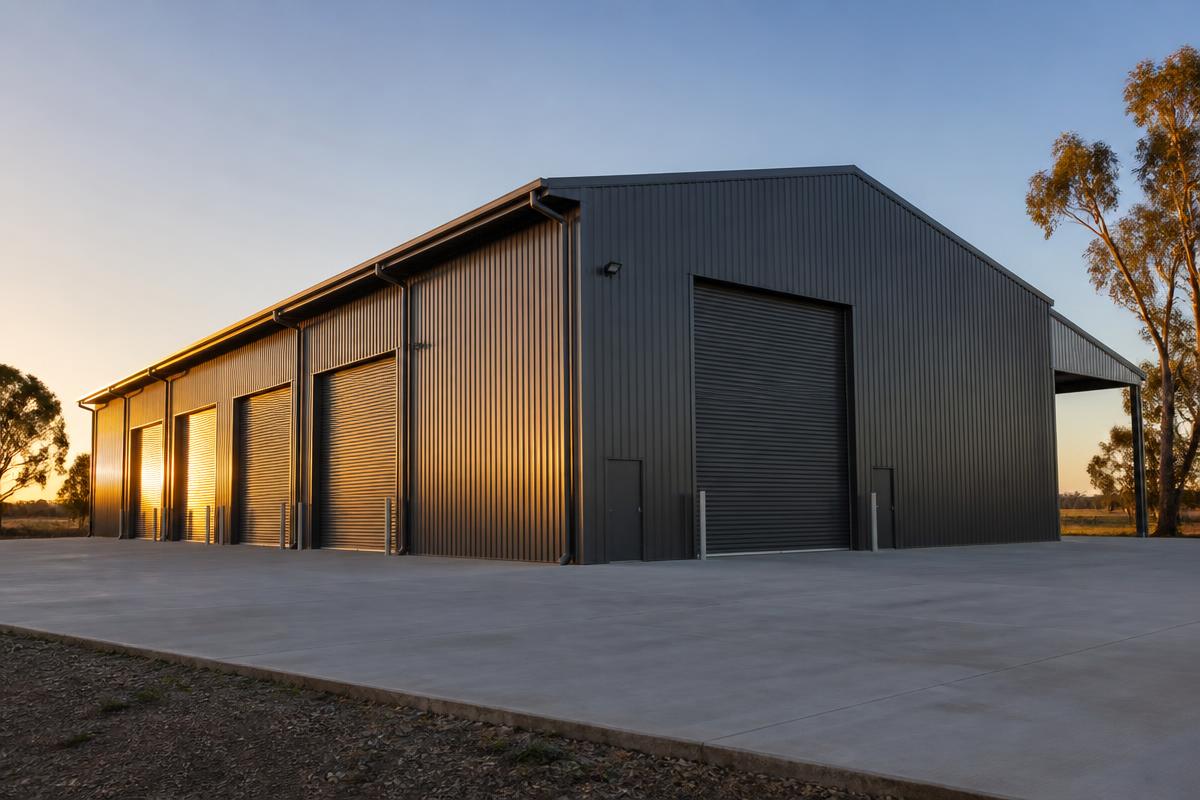
The number of bays affects more than just the length of your shed. It determines where doors and openings can be positioned, how the frame is laid out and how well the building works for vehicles, machinery, storage or workshop space. This guide explains how to choose the right bay layout before you finalise your shed size.

What a bay actually is

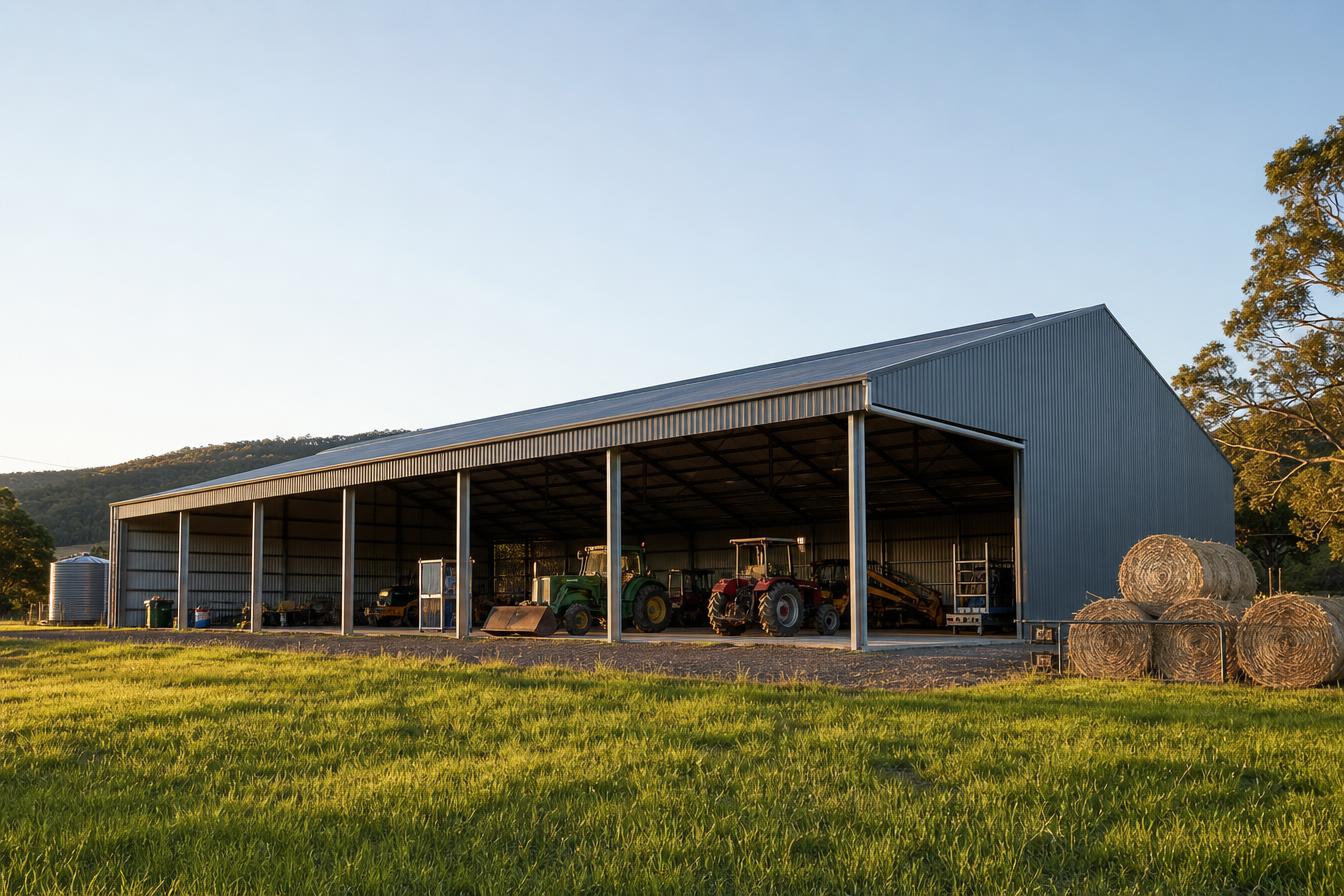
A bay is the space between two structural frames. Stand inside a shed and look up - each pair of columns with a rafter between them is referred to as a portal frame, and the gap from one frame to the next is a bay. Total length is simply bay size multiplied by the number of bays.

Practical bay spacing sits between 3m and 6m. Over 6m the purlins and girts have to work much harder, so the steel gets heavier and the cost climbs. Most of what we build lands between 3m and 6m per bay.

What fits in each bay count

The table below assumes a common 3m bay for smaller buildings and around 6m for commercial and rural spans. Bay size is adjustable, so treat the lengths as the typical starting point rather than a fixed rule.

Typical bay counts, lengths and uses
BaysTypical lengthWhat it usually suits
2 bays6m to 8mDouble garage, 1-2 roller doors, plus a personal access door.
3 bays9m to 12mDouble garage with a workshop or storage bay at the end.
4 bays12m to 16mTwo vehicles plus a caravan or boat bay, or a small farm shed
5 bays15m to 20mWorkshop with vehicle parking, or machinery storage on a hobby block
6 bays18m to 36mTractors and implements, multiple vehicles, larger rural or commercial storage
8 bays24m to 48mTrucks, headers, contractor and commercial storage

Lengths are indicative only. Your final length, bay count and bay spacing depend on span, wind classification, door positions and what your block will allow.

Bay width is not door width

This is the one that catches people out. A 3m bay does not give you a 3m clear opening. 50% of the width of the portal columns sit inside the bay, and the roller door frame and guides take up more room again, so the usable opening is roughly the bay size less a minimum of 365mm.

If a 3m wide door for a caravan is required, we size the bay around the door rather than the other way round. It is far cheaper to widen a bay on paper than to discover the problem on delivery day.

  • 3.0m bay: around 2.6m of clear opening - fine for a single car
  • 3.6m bay: around 3.2m clear - suits a caravan, boat, car trailer
  • 4.5m bay: around 4.1m clear - machinery, tandem parking, wide access
  • Double roller doors 5 - 5.4m need a 5.5 - 6m wide bay

How bays interact with span and height

Bays run along the length of the building. Span is the width across it, and a clear span means no internal columns under the portal rafter at all - which is what you want when you are reversing machinery or parking multiple vehicles in a row.

Wall height matters here too. A roller door needs the wall to sit about 500mm above the clear opening so the drum has somewhere to live. Increase the door height in a bay and the wall height for the whole building generally has to follow.

  • More bays, shorter spacing: lighter frames, more columns  = lower cost
  • Fewer bays, wider spacing: fewer obstructions inside, heavier steel = higher cost
  • Clear span across the width is separate from bay spacing along the length
  • Every opening you want needs a bay wide enough to carry it

More bays or a longer bay?

If the shed is mainly for storage and you will be walking around what is inside, more bays at 3m is usually the cheaper way to reach a given length. If you are driving machinery in and out, or you want an uninterrupted run along one wall, fewer and wider bays is worth the extra cost of a heavier steel frame design.

Because every one of our buildings is engineered for the site rather than pulled off a shelf, we can set bay spacing to suit what you are actually doing with the shed - including making one bay wider than the rest for a specific door or piece of machinery.

How many bays do I need?

How long is a 4 bay shed?
Usually 12m to 16m. At a standard 3m bay spacing a 4 bay shed is 12m long; at 3.6m bays = 14.4m; at 4m bays = 16m.  Bay spacing is adjustable between roughly 3m and 6m, so the same bay count can produce different bay widths and a total length perfect for your specific requirement.
How wide should a shed bay be?
Between 3m and 6m is ideal for most use cases, although they can be smaller than 3m if required. Above 6m the purlins and girts need to be heavier, which costs more. Most sheds we build sit between 3m and 6m per bay.
What is the clear opening in a 3m bay?
About 2.6m. The columns and the roller door guides take up a minimum of 365mm of the bay, so the usable opening is always narrower than the bay itself. If a specific door width matters, we size the bay around the door.
Is it cheaper to have more bays or fewer?
For the same overall length, more bays at closer spacing generally uses lighter steel and costs less than fewer, wider bays. Wider bays cost more but give you fewer columns to work around inside, which is often worth it for machinery.
Can one bay be wider than the others?
Yes. Because every Spartan shed is engineered for its intended use rather than supplied as a fixed kit, we can widen a single bay to suit a caravan door, a machinery opening or an awkward access point without changing the rest of the building.

Genuine Australian steel

Every Spartan Shed is built from 100% Australian BlueScope® steel with genuine COLORBOND® and ZINCALUME® finishes - backed by BlueScope® steel warranties and our own workmanship guarantee. Ask us for full warranty details on your specific building.

  • BlueScope® Australian steel — used by Spartan Sheds, shed builders in Bundaberg QLD
  • COLORBOND® steel logo — COLORBOND® sheds, garages and carports across Bundaberg and the Wide Bay
  • ZINCALUME® steel logo — ZINCALUME® roofing and cladding supplied by Spartan Sheds Bundaberg

Not sure how many bays you need?

Tell us what is going inside and how you will use it, and we will work the bay count and spacing back from there - or try it yourself in the 3D Shed Designer.